|
|
 Literatur: Literatur:
Ariely, D. (2008). The Truth about
Relativity. In Harper Collins,Predictably Irational: The Hidden Forves that Shape
Our Decisions(pp. 1-21).New York, USA:
HarperCollins.
Dan Ariely and Tom S. Wallsten (1995),
“Seeking Subjective Dominance in Multidimensional Space: An Explanation of the
Asymmetric Dominance Effect.” Organizational Behavior and Human Decision
Processes, Vol. 63, No. 3: 223-232.
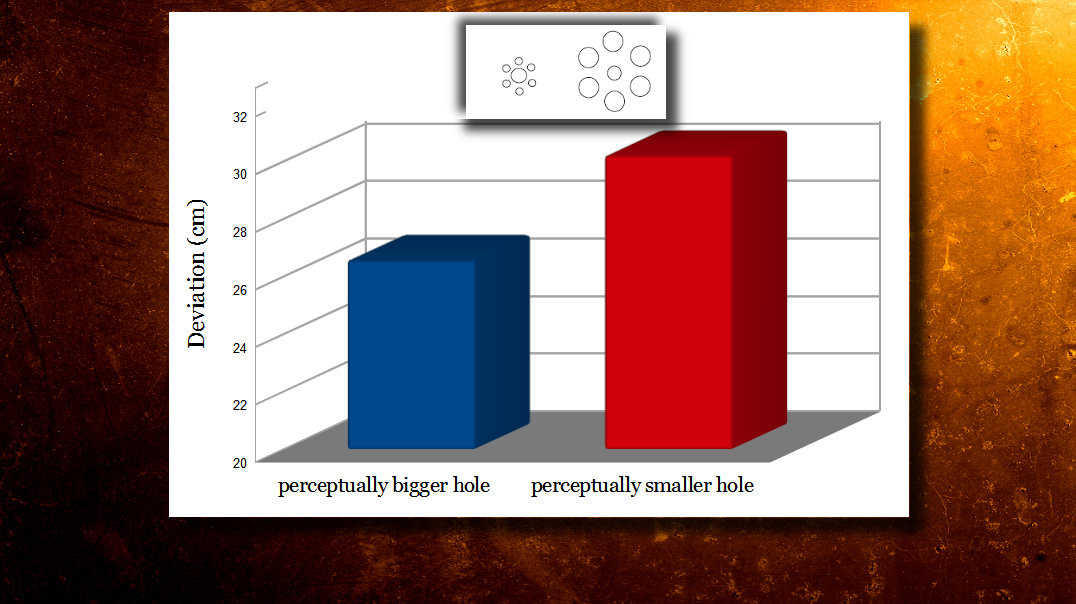
Chauvel G1, Wulf G, Maquestiaux F. (2014). Visual illusions can
facilitate sport skill learning. Psychon Bull Rev. 2014 Oct 15.
Colman, A. M., Pulford, B. D., & Bolger, F. (2007).
Asymmetric dominance and phantom decoy effects in games. Organizational Behavior
and Human Decision Processes, 104, 193–206.
Terry Connolly Jochen Reb Edgar E. Kausel.
Regret salience and accountability in the decoy effect. Judgment and Decision
Making , Vol. 8, No. 2, March 2013, pp. 136–149.
Ha, Young-Won, Sehoon Park, and Hee-Kyung
Ahn (2009), “The Influence of Categorical Attributes on Choice Context
Effects,”Journal of Consumer Research, 36 (3),
463–77.
Hamilton, Rebecca W. (2003), “Why Do People
Suggest What They Do Not Want? Using Context Effects to Influence
Others’Choices,”Journal of Consumer Research, 29
(March),492–506
Hedgcock, William, Akshay R. Rao, and
Haipeng Chen (2009), “Could Ralph Nader’s Entrance and Exit Have Helped Al Gore?
The Impact of Decoy Dynamics on Consumer Choice,” Journal of Marketing Research, 46
(June), 330–43.
Highhouse, S. (1996). Context-dependent
selection: The effects of decoy and phantom job candidates. Organizational Behavior
and Human Decision Processes, 65, 68–76.
Huber, J., Payne, J. W., & Puto, C.
(1982). Adding asymmetrically dominated alternatives: Violations of regularity
and the similarity hypothesis. Journal of Consumer Research, 9,
90–98.
Huber, J., & Puto, C. (1983). Market
boundaries and product choice: Illustrating attraction and substitution effects.
Journal of Consumer Research, 10, 31–44.
Huber, O. & Seiser, G. (2001).
Accounting and convincing: The effect of two types of justification on the decision
process. Journal of Behavioral Decision Making, 14,
69–85.
Hsu HC1, Liu WL. (2011). Using decoy
effects to influence an online brand choice: the role of price-quality trade-offs.
Cyberpsychol Behav Soc Netw. 2011 Apr;14(4):235-9. doi: 10.1089/cyber.2009.0262.
Epub 2010 Nov 1.
Malaviya, P., & Sivakumar, K.
(2002). The influence of choice justification and stimulus meaningfulness on the
attraction effect. Journal of Marketing Theory and Practice, 10(4),
20–29.
Pettibone, J. C., & Wedell, D. H.
(2000). Examining models of nondominated decoy effects across judgment and
choice. Organizational Behavior and Human Decision Processes, 81,
300–328.
Selin A. Malkoca, , ,William
Hedgcockb,Steve Hoefflerc. (2013). Between a rock and a hard place: The failure of
the attraction effect among unattractive alternatives. ournal of Consumer
Psychology. Volume 23, Issue 3, July 2013, Pages
317–329
Mark Kelman, Yuval Rottenstreich, and Amos
Tversky, Context-Dependence in Legal Decision Making, Behavioral Law and Economics,
edited by Cass R. Sunstein. New York: Cambridge University Press, 2000.
p.61-95.
Mishra, S., Umesh, U. N., & Stem, D. E.
(1993). Antecedents of the attraction effect: an informationprocessing approach.
Journal of Marketing Research, 30,
331–349.
Kim, Sunghan and Lynn Hasher (2005), “The
Attraction Effect inDecision Making: Superior Performance by Older
Adults,”Quarterly Journal of Experimental Psychology: Section A, 58(1),
120–33.
Malaviya, P., & Sivakumar, K. (2002).
The influence of choice justification and stimulus meaningfulness on the attraction
effect. Journal of Marketing Theory and Practice, 10(4),
20–29.
Mishra, S., Umesh, U. N., & Stem, D. E.
(1993). Antecedents of the attraction effect: an informationprocessing approach.
Journal of Marketing Research, 30, 331–349.
Moran, Simone and Joachim Meyer (2006),
“Using Context Effects to Increase a Leader’s Advantage: What Set of Alternatives
Should Be Included in the Comparison Set?” International Journal of Research in
Marketing, 23 (2), 141–54.
Park, J., & Kim, J. (2005). The effects
of decoys on preference reversals: the role of perspective and providing
justification. Journal of Consumer Psychology, 15, 94– 107.
Pettibone, J. C., & Wedell, D. H. (2000).
Examining models of nondominated decoy effects across judgment and choice.
Organizational Behavior and Human Decision Processes, 81, 300–328.
Constantine Sedikides, Dan Ariely and Nils
Olsen (1999), “Contextual and Procedural Determinants of Partner Selection: On
Asymmetric Dominance and Prominence.” Social Cognition, Vol. 17:
118-139.
Scarpi, Daniele (2008), “The Impact of Decoys
and Background Information on Consumers’ Preferences and Decision
Making,”International Review of Retail, Distribution & ConsumerResearch, 18
(1), 1–15.
Schwartz JA1, Chapman GB. (1999). Are more
options always better? The attraction effect in physicians' decisions about
medications. Med Decis Making. 1999 Jul-Sep;19(3):315-23.
Simonson, I. (1989). Choice based on
reasons: The case of attraction and compromise effects. Journal of Consumer
Research, 16, 158–174.
Slaughter, J. E., Kausel, E. E., &
Quiñones, M. A. (2011). The decoy effect as a covert influence tactic. Journal of
Behavioral Decision Making, 24, 249– 266.
Slaughter, J. E., Sinar, E. F., &
Highhouse, S. (1999). Decoy effects and attribute-level inferences. Journal of
Applied Psychology, 84, 823–828.
Tenbrunsel, A. E., & Diekmann, K. A.
(2002). Job decision inconsistencies involving social comparison information: The
role of dominating alternatives. Journal of Applied Psychology, 87,
1149–1158.
Sybil Yang and Michael Lynn (2014) More
Evidence Challenging the Robustness and Usefulness of the Attraction Effect.
Journal of Marketing Research: August 2014, Vol. 51, No. 4, pp.
508-513.
|
|


 Wood, G., Vine, S. J., & Wilson, M. R. (2013). The impact
of visual illusions on perception, action planning, and motor performance. Attention,
Perception, & Psychophysics, 75,830–834. doi:10.3758/s13414-013-0489-y
Wood, G., Vine, S. J., & Wilson, M. R. (2013). The impact
of visual illusions on perception, action planning, and motor performance. Attention,
Perception, & Psychophysics, 75,830–834. doi:10.3758/s13414-013-0489-y