
v(Unbewusste) Beeinflussung durch Musik
|

|
Können uns Gerüche auch dann beeinflussen,
wenn wir sie gar nicht bewusst wahrnehmen? Im Gegensatz zu
subliminalen Audio- oder Videobotschaften wird die Wirkung
subliminaler Gerüche erst seit wenigen Jahren erforscht. Keywords:
|


|
So ergaben licking-and-grooming-Experimente: Ratten, die in ihrer Kindheit viel Liebkosungen empfangen, sind ihr Leben lang weniger ängstlich und stecken Stresstests wie das Schwimmen in einem engen Gefäß besser weg. 2004 konnten Forscher um Michael Meaney von der McGill University im kanadischen Montreal zeigen, dass dafür ein so genannter epigenetischer Schalter verantwortlich ist (siehe Kasten „Epigenetische Prägung“), der die Aktivität stressbezogener Gene reguliert. Scafidi F, Field T, Schanberg SM, et al. Effects of tactile/kinesthetic stimulation and sleep/wake behavior of preterm neonates. Infant Behav Dev 1986;9:91-105. Leonard JA1, Berkowitz T, Shusterman A. (2014). The effect of friendly touch on
delay-of-gratification in preschool children. Q J Exp Psychol (Hove). 2014;67(11):2123-33. doi:
10.1080/17470218.2014.907325. Epub 2014 Apr 22. - Die Kinder wurden gebeten den Verzehr von Süßigkeiten aufzuschieben: a) leichte Berührung am Rücken
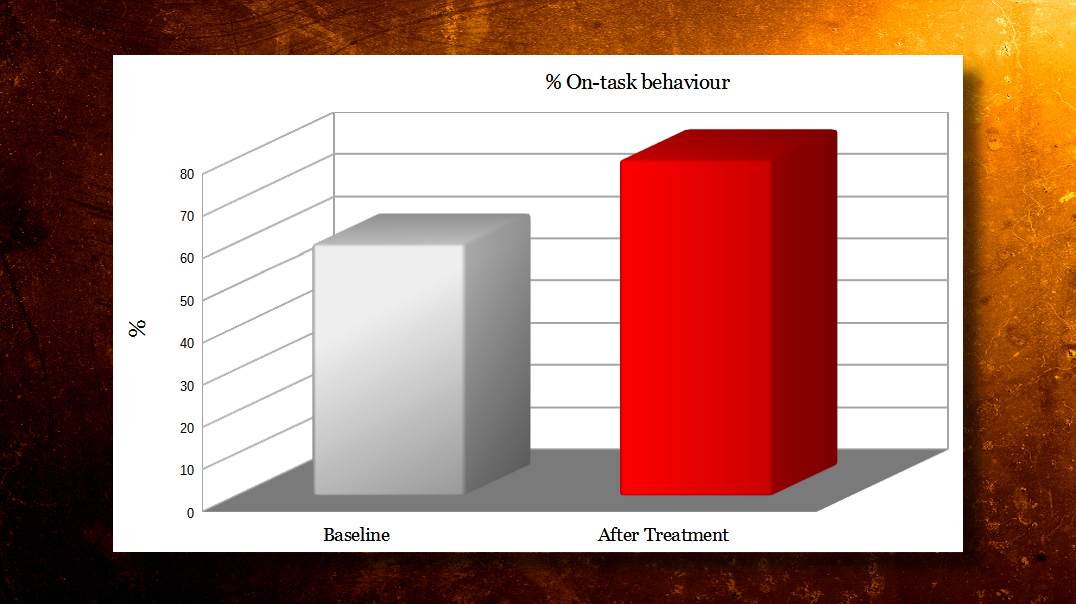
Kazdin, A. & Klock, J. (1973). The effect of nonverbal teacher approval on student attentive
behaviour. Jounal of Applied Behavior Analysis, 6, 643-654.
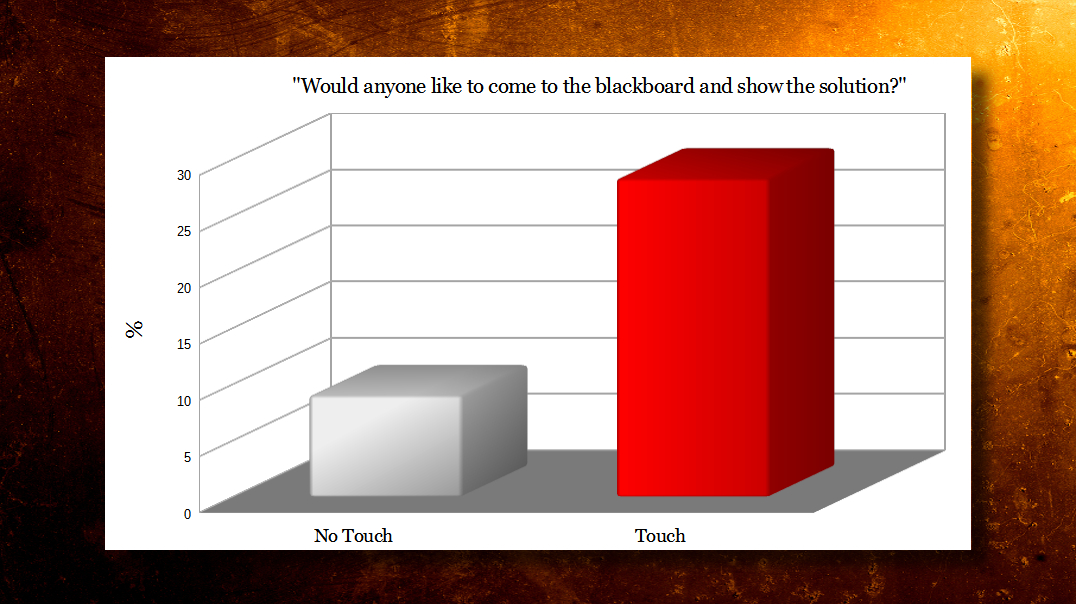
Gueguen, N. (2004). Nonverbal encouragement of participation in a course: The effect of touching. Social Psychology of Education,7,89-98.doi:10.1023/B:SPOE.0000010691.30834.14 - Versuchspersonen: 105 Studenten (Statistikkurs) b) keine Berührung Nannberg, J., & Hansen, C. (1994). Post-compliance touch: An incentive for task performance. The Journal of Social Psychology, 134,301-307. - Versuchspersonen: 198 Studenten
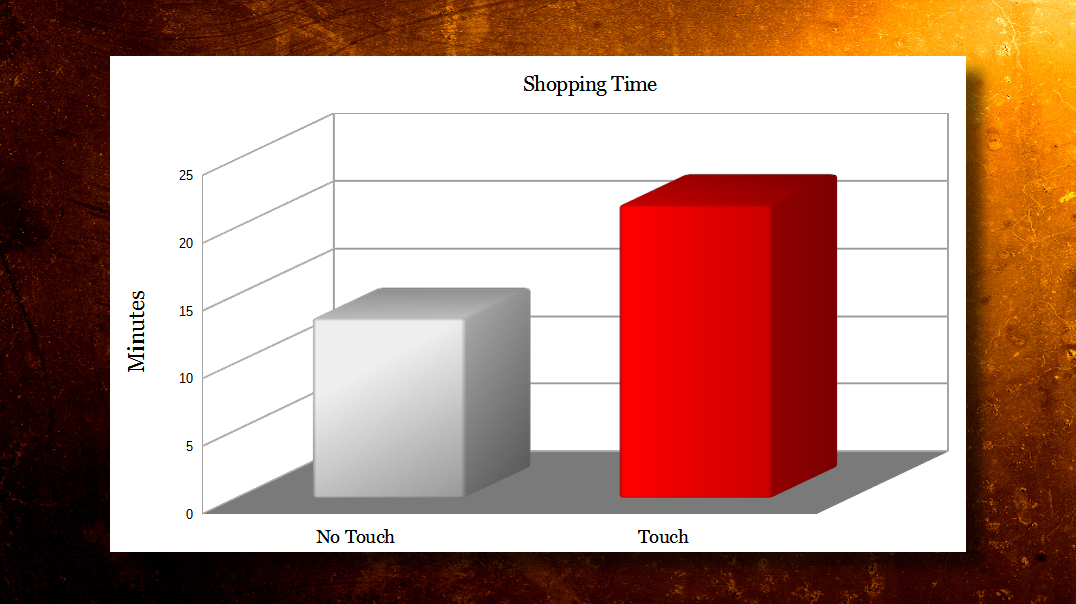
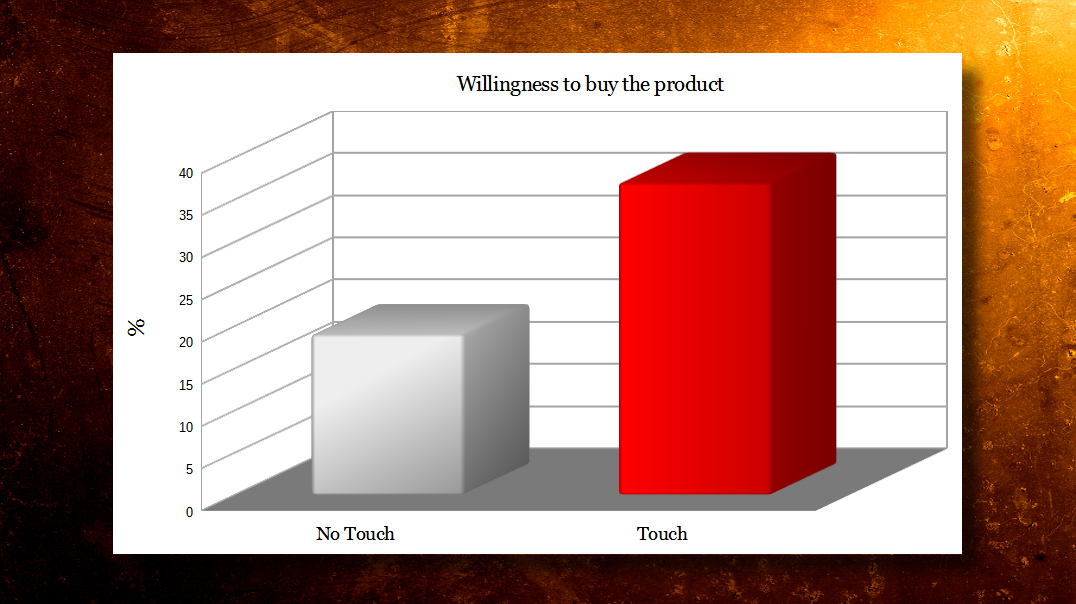
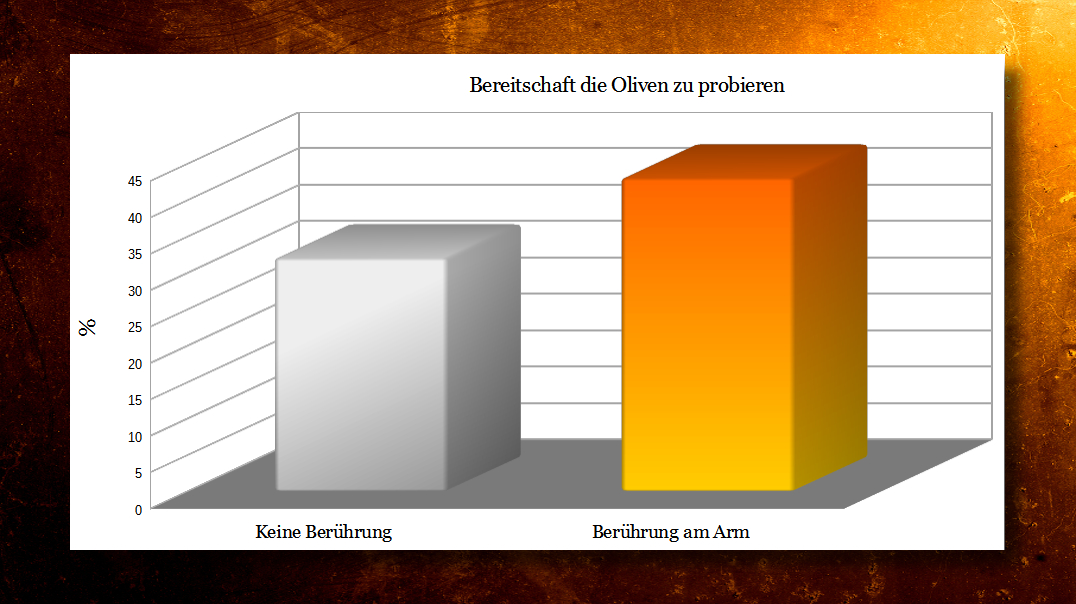
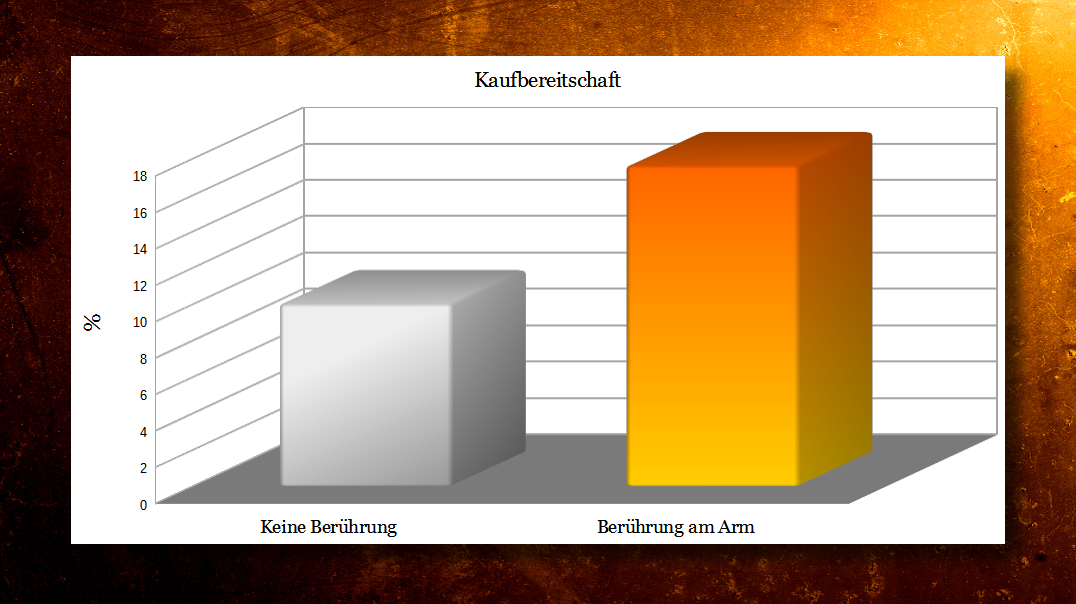
Im Verkauf: Hornik, J. (1992a). Effects of physical contact on customers’ shopping time and behavior.
Marketing Letters, 3, 49-55. ca 13 vs ca 22min
Versuchspersonen: 136 Besucher eines Supermarkts
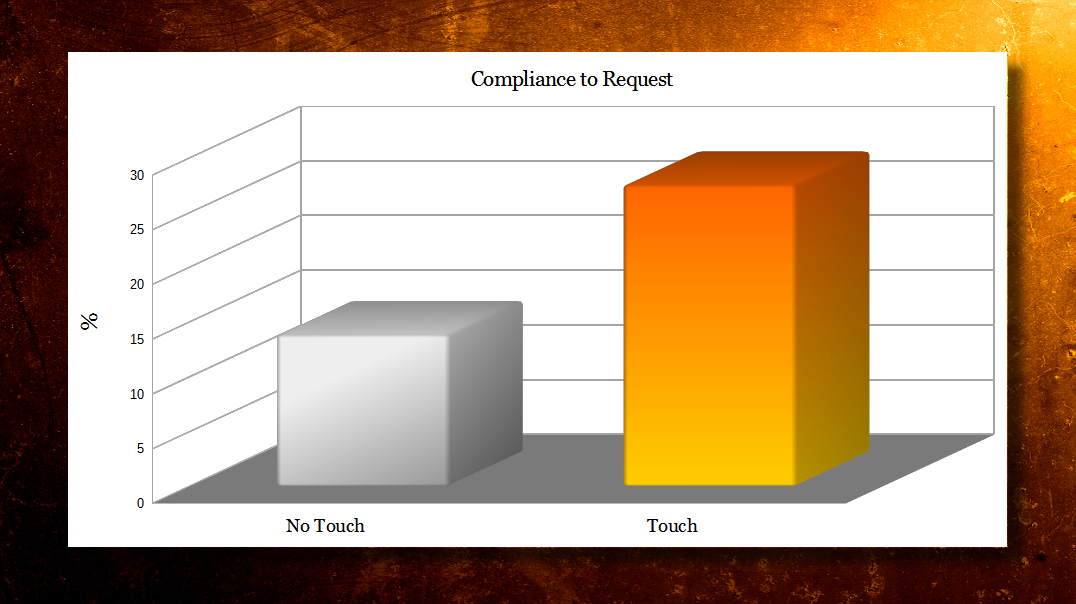
- Versuchspersonen: 1096 Passanten (Markt) 10 vs 17,6
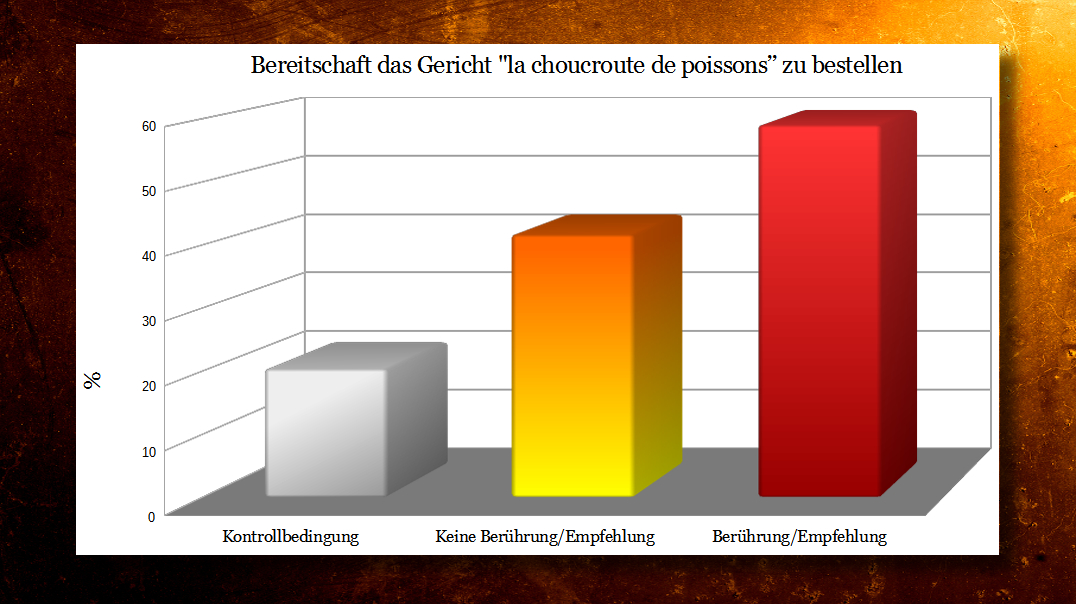
Interessant für Service-Personal und Bar/Restaurant-Besitzer
Guéguen, N., Jacob, C., & Boulbry, G. (2007). Server’s suggestion and tactile contact: An
evaluation in a restaurant. International Journal of Hospitality Management, 26,1019-1023.
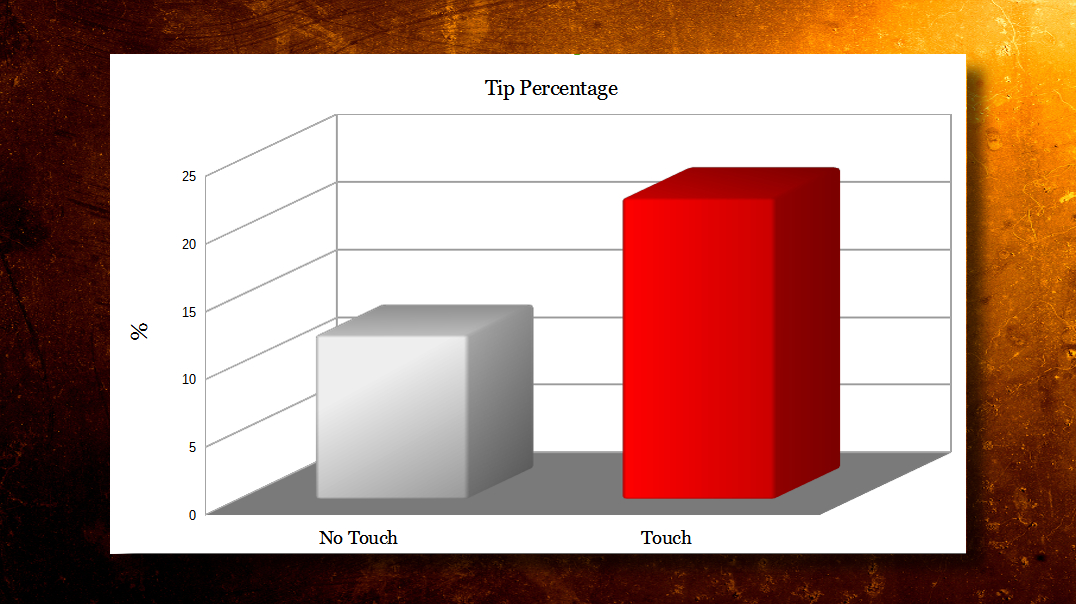
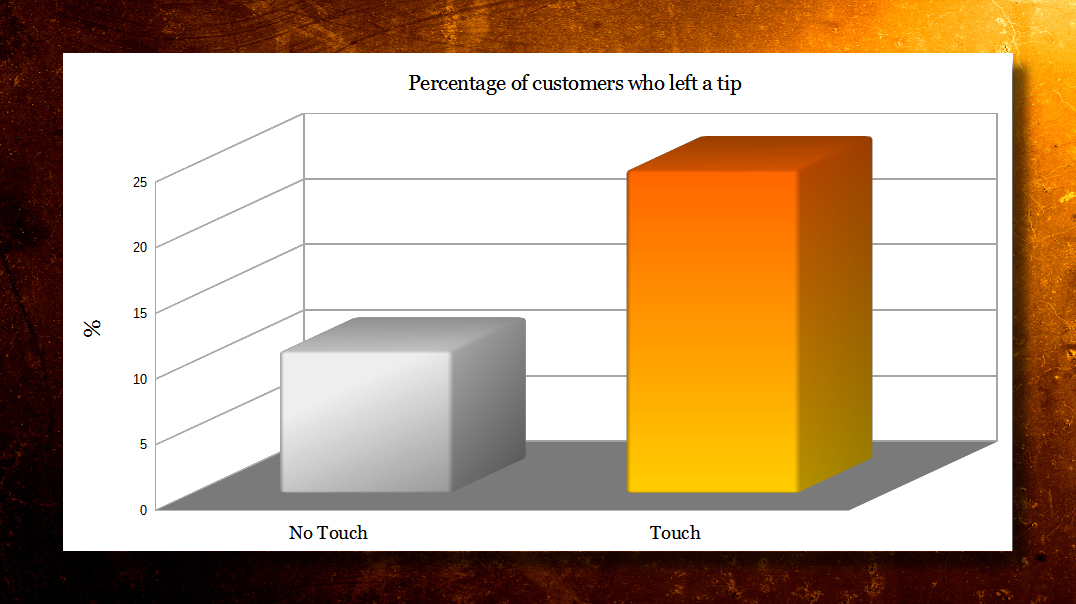
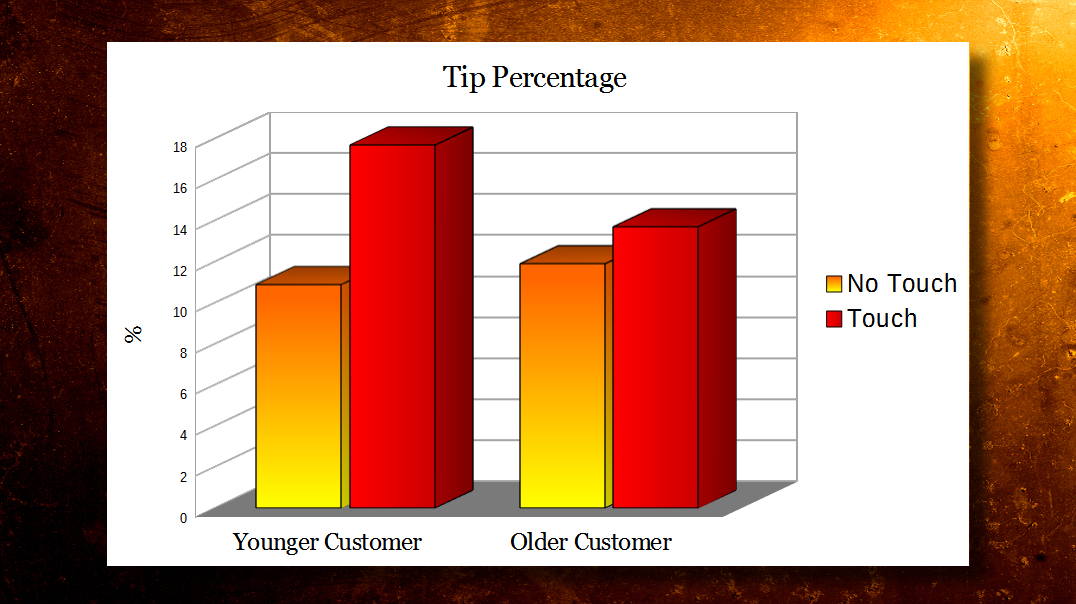
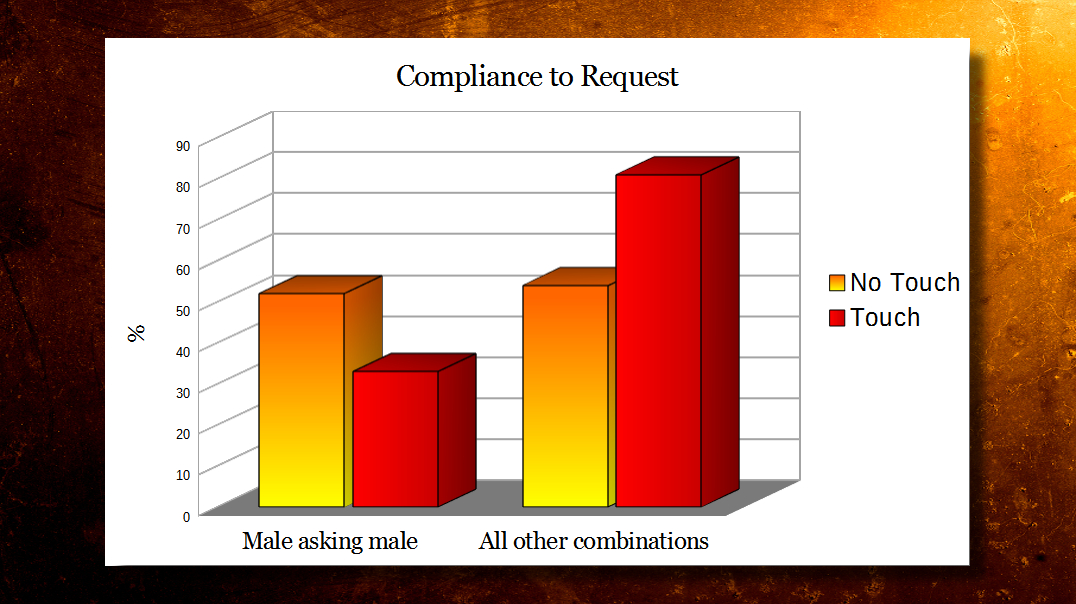
Bemerkung: - In der Bar war die Berührung durch einen Vertreter des anderen Geschlechts effektiver (Die Kunden waren wohl auf mehr aus; im Restaurant waren viele Pärchen) Guéguen, N., & Jacob, C. (2005). The Effect of touch on tipping: An evaluation in a French’s
bar. International Journal of Hospitality Management, 24,295-299. Lynn, M., Le, J. M., & Sherwyn, D. (1998). Reach out and touch your customers. Cornell Hotel
and Restaurant Administration Quarterly, 39,60-65.
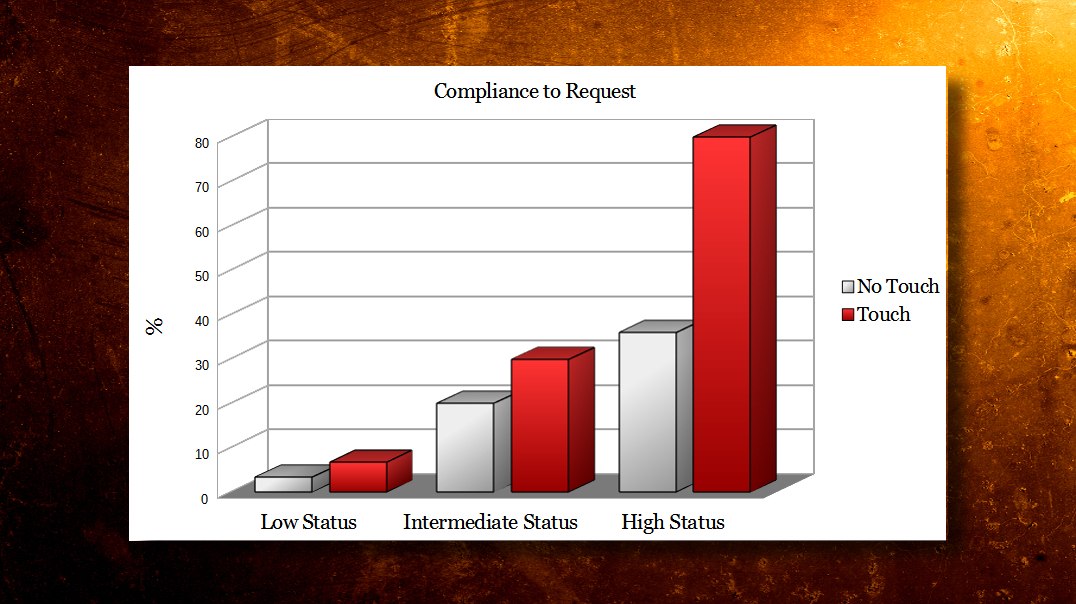
Ergebnisse: - Bei jüngeren VPn war die Intervention erfolgreicher => ältere Menschen (mit höherem Status) betatschen einen häufiger (siehe z.B. Eltern>Kinder) - wenn jüngere Menschen ältere Menschen betatschen ist das ungewohnter...
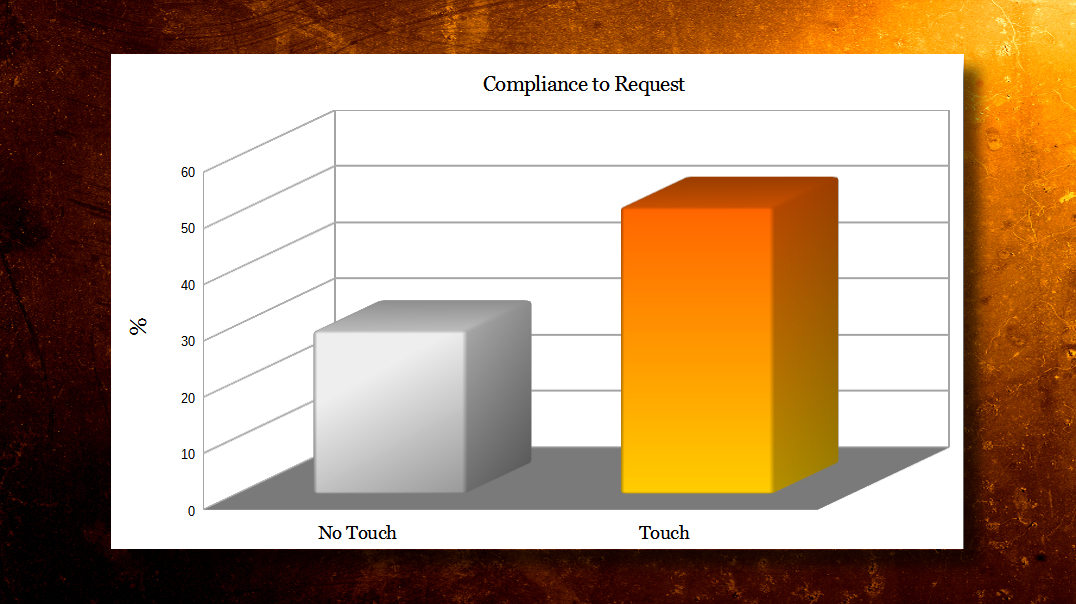
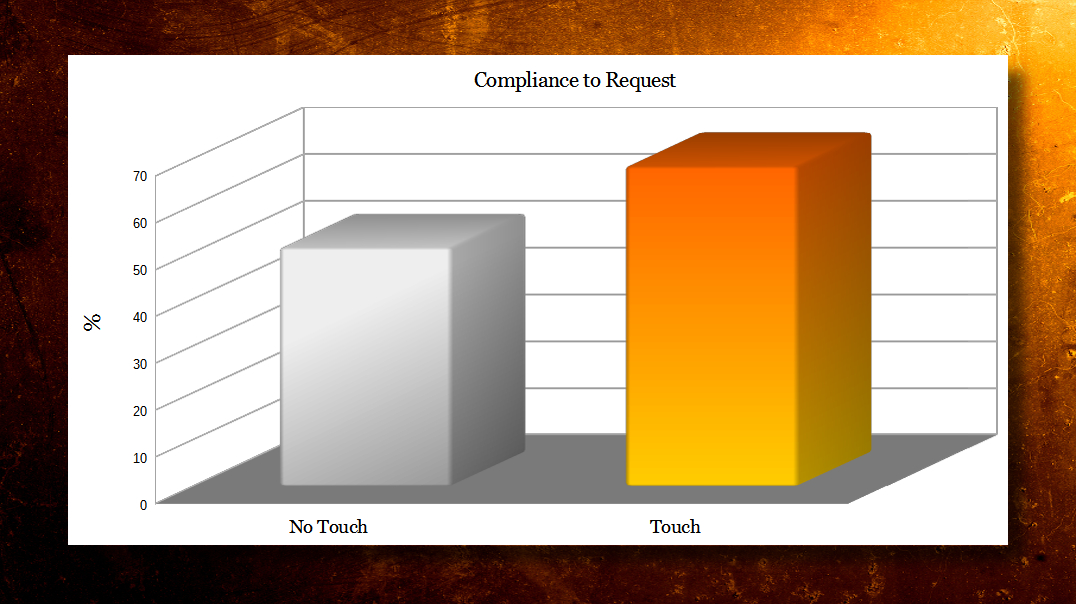
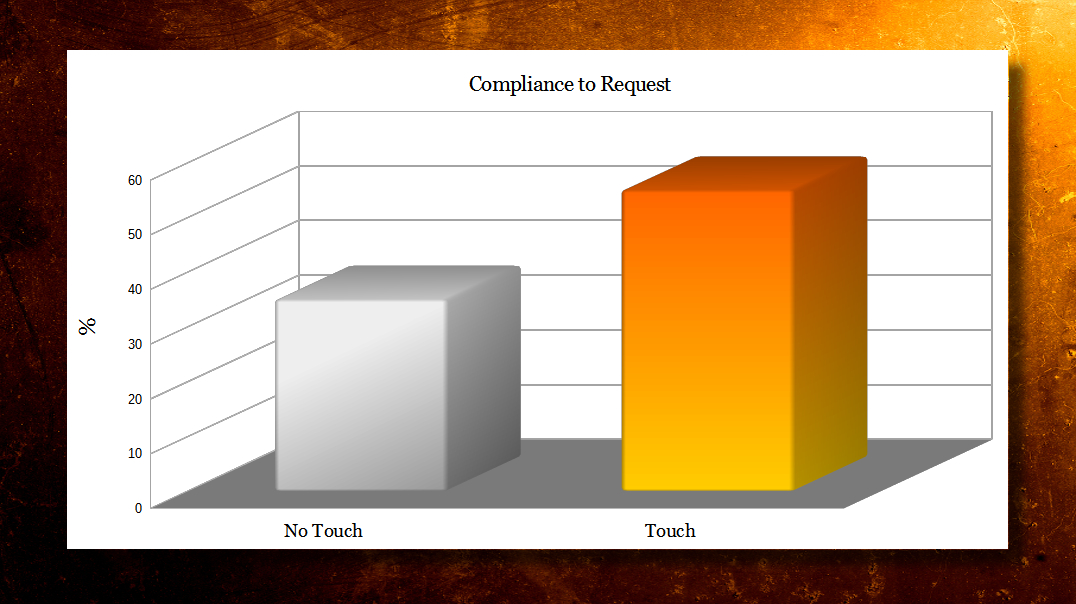
Hilfsbereitschaft und anderes: Kleinke, C. (1977). Compliance to requests made by gazing and touching experimenters in field settings. Journal of Experimental Social Psychology, 13,218-223. Versuchspersonen: 178 Passanten (Kaufhaus) 29 vs 51 Willis, F.N., Hamm, H.K. (1980). The use of interpersonal touch in securing compliance. Journal
of Nonverbal Behavior, 5, 49-55.
Joule, R.V., Guéguen, N. (2007). Touch, compliance, and awareness of tactile contact. Perceptual and Motor Skills 104, 581–588. - Versuchspersonen: 368 rauchende Studentinnen (in der Cafeteria, Parkbank,... sitzend) - Ziel war es eine Zigarette zu schnorren
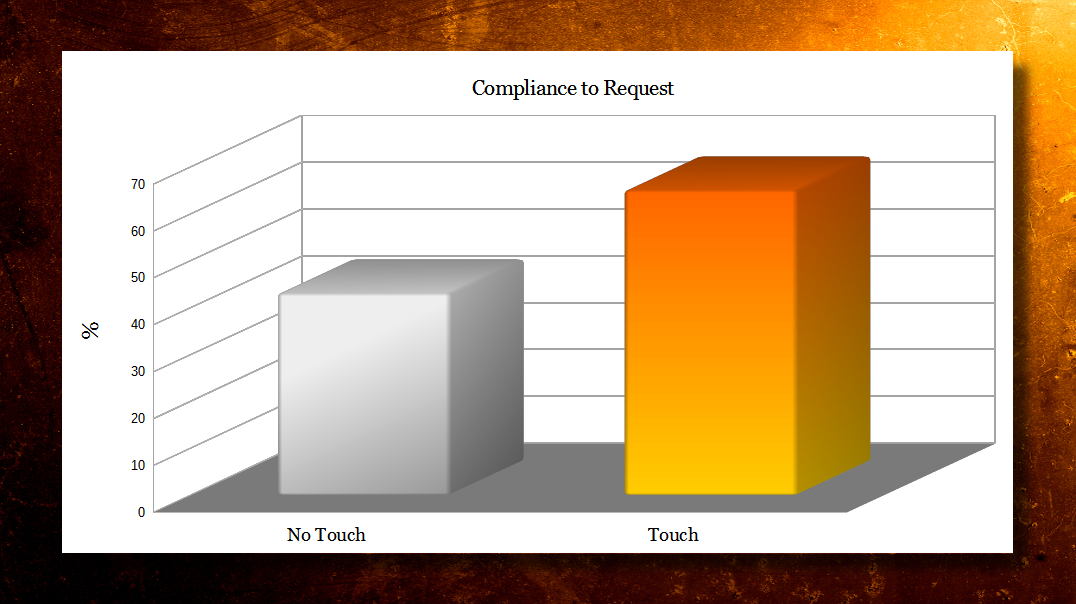
Gueguen, N., & Fischer-Loku, J. (2002). An evaluation of touch on a large request: A field setting. Psychological Reports, 90(1), 267–269. doi:10.2466/PR0.90.1.267-269. Versuchspersonen: 120 Passanten a) Leichte Berührung am Unterarm (ca. 1 Sek.) 35 vs 55
Doliński, D. (2010). Touch, compliance, and homophobia. Journal of Nonverbal Behavior, 34,
179-192.
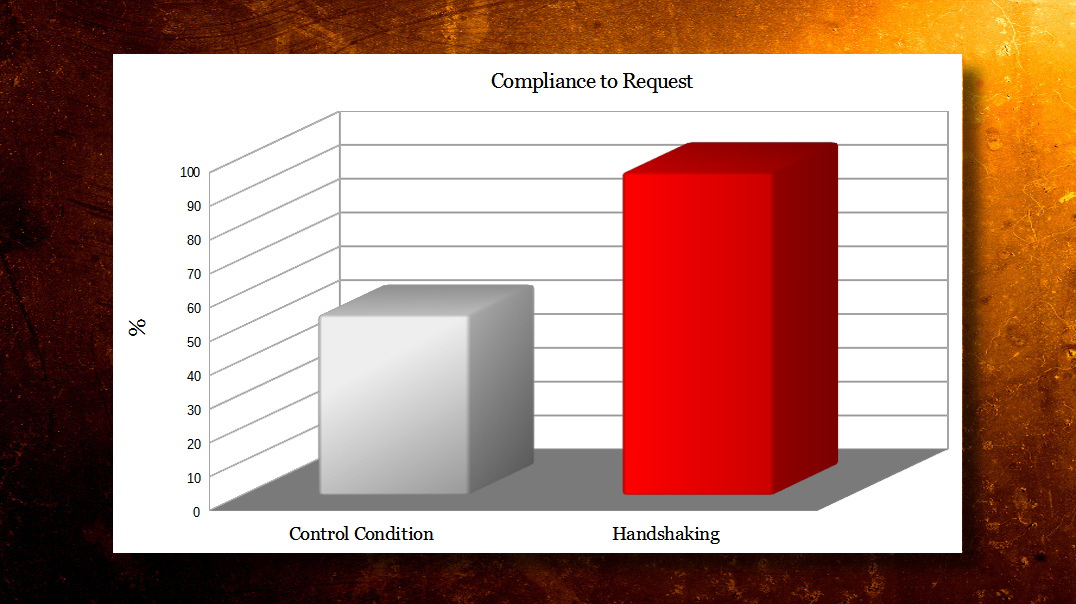
Gueguen, N. (2013). Handshaking and compliance with a request: A door-to-door setting. Social Behavior and Personality, 41(10), 1585-1588. - Versuchspersonen: 37 Hausbewohner - Die Probanden wurden um eine 1-Euro Spende für Kinder in Madagaskar gebeten a) Mit Händeschütteln
Gueguen N., Afifi F., Brault S., Charles-Sire V., Leforestier P. M., Morzedec A., Piron E. (2011). Failure of tactile contact to increase request compliance: The case of blood donation behavior. Journal of Articles in Support of the Null Hypothesis, 8, 1-8. - 281 Studenten (Ingenieurwissenschaften)
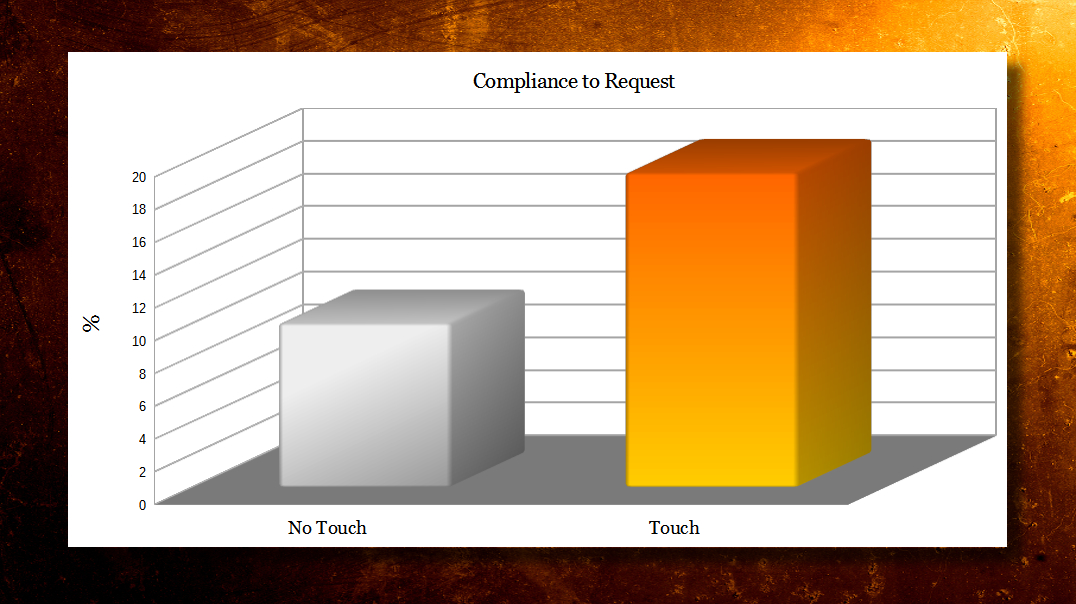
Guéguen, N. (2007). The effect of a man’s touch on woman’s compliance to a request in a courtship context. Social Influence,2, 81–97. Experiment 1: "Willst du tanzen?" Experiment 2: "Kann ich deine Telefonnummer haben?"
10 vs 19,2 Experiment 3: Replikation und Erweiterung Alle Frauen wurden auf die selbe Weise angesprochen: ‘‘Hello. My name’s Antoine. I just want to
say that I think you’re really pretty. I have to go to work this afternoon but I wonder if you
would give me your phone number. I’ll phone you later and we can have a drink together
someplace.’’
|
 Besprochene
Studien:
Besprochene
Studien: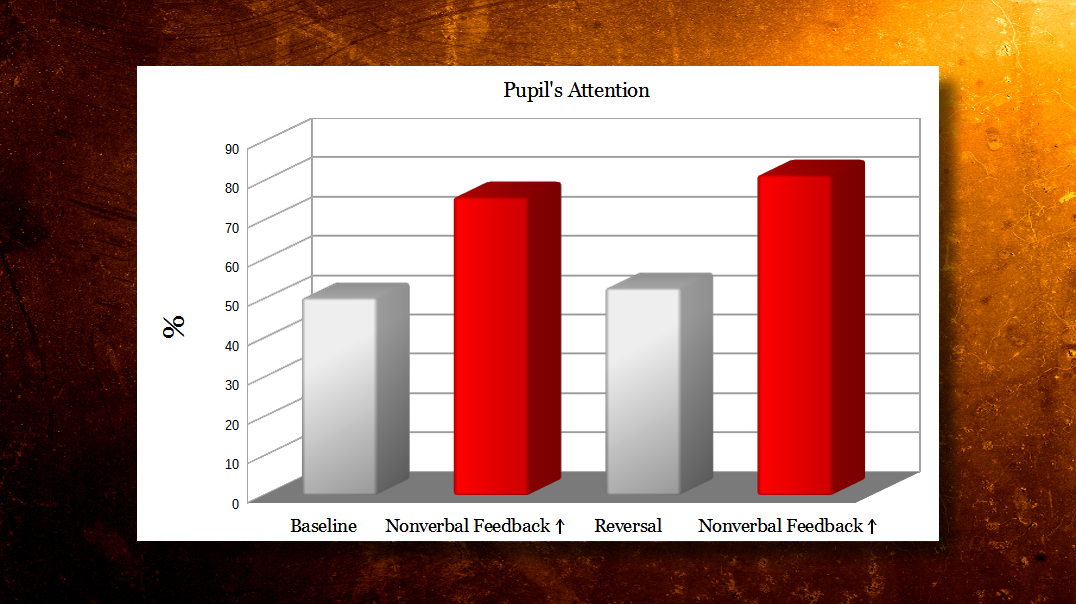
Zum Nachlesen und Vertiefen:

|
 Literatur:
|